Two layers
- Route clean
- 278 of 299 boards on our public bench
- Against
- KiCadRoutingTools 210, freerouting 113
- Check it
- The tasks and the referee are public
- Judge
- The bench’s referee, 16 Nov 2026. The others ran 30 Sep
Router
 Q flex, 25 parts
 P rigid, 78 parts
 R flex, wiring
 T flex, wiring
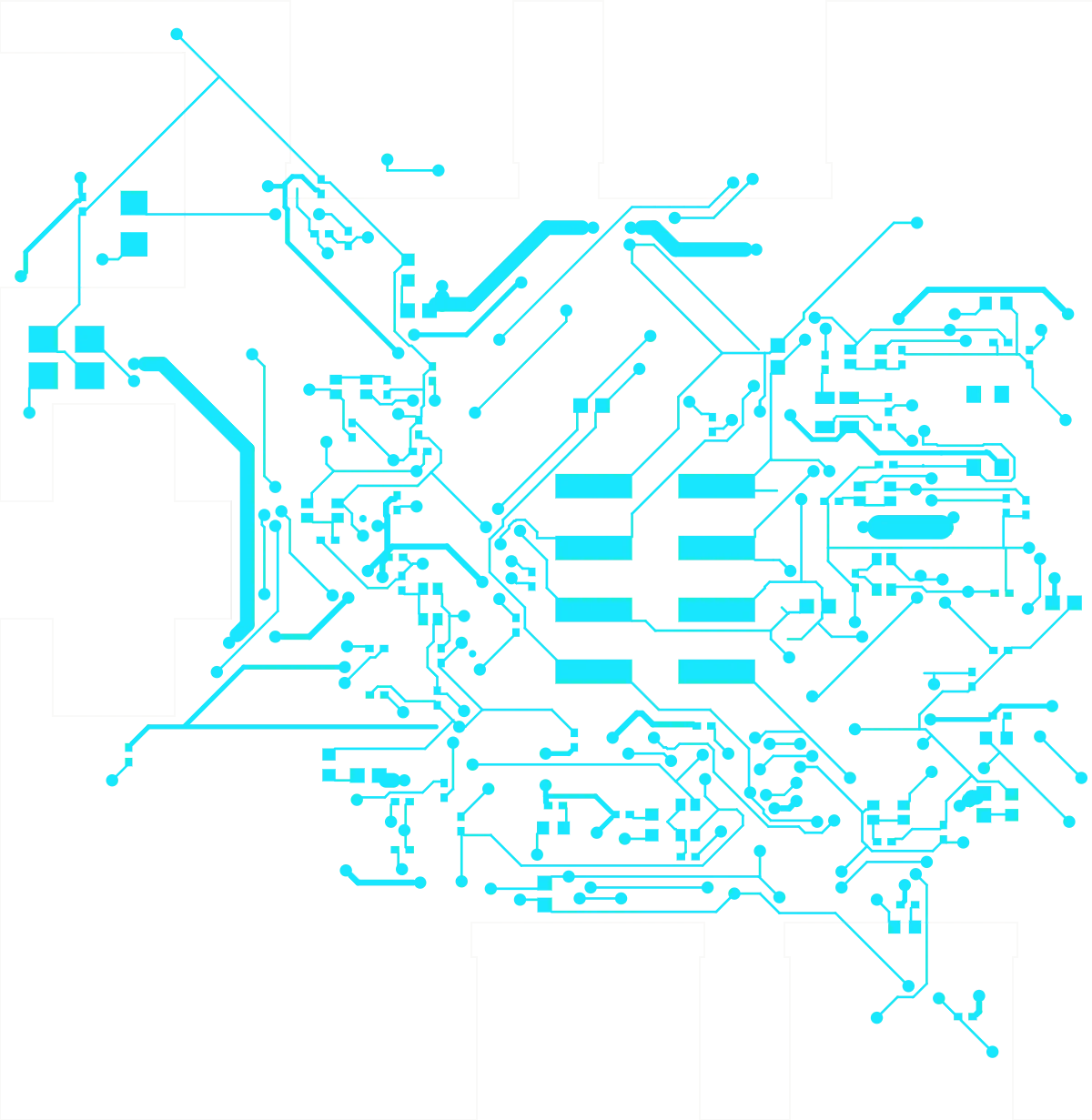 S flex, 78 parts
Our final PCBGolf entry: comma.ai’s 181-part circuit on five single-layer boards, joined by 688 pins and no vias. An early Lightcycle laid the copper, and KiCad finds no errors on any of the five. 13 Oct 2026. Pulled apart here; drag to turn.
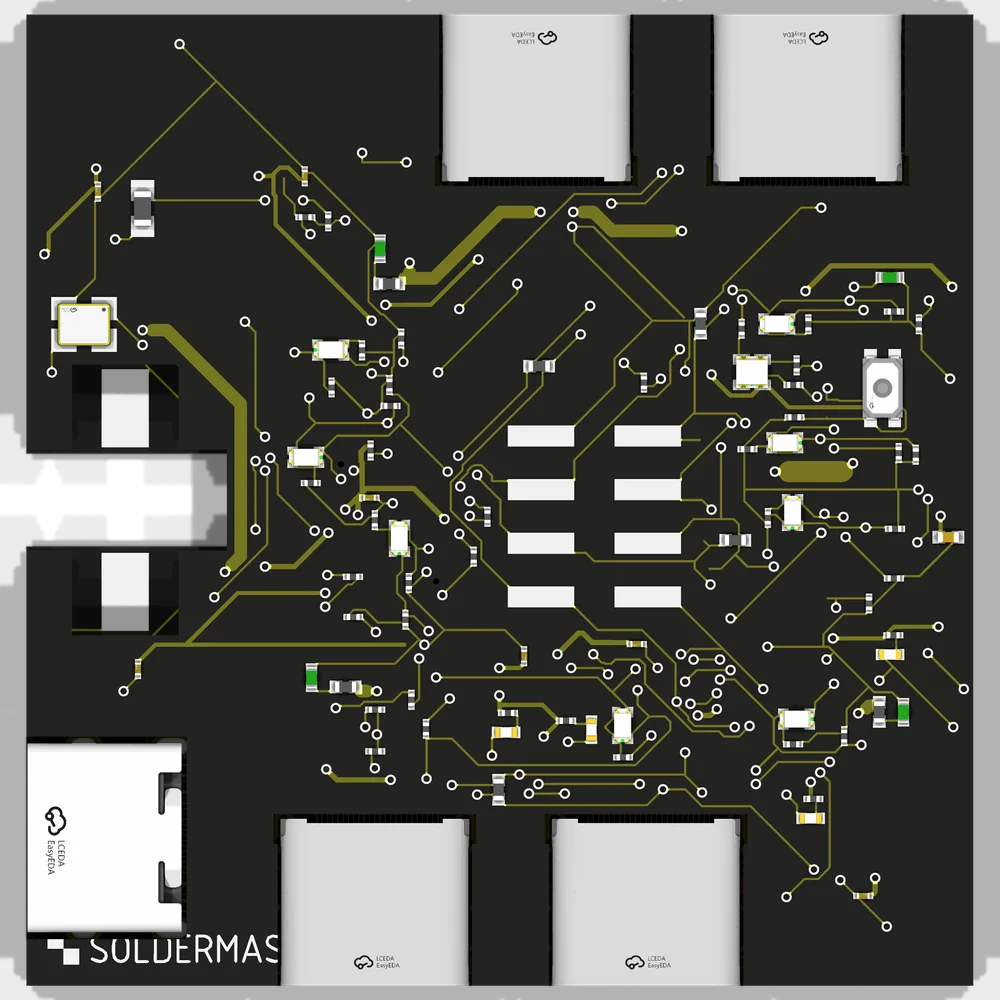
Every bench number is a clean pass under KiCad’s own design check, run by us. Lightcycle 0.1.5 was run again on 16 Nov 2026 under KiCad 10.0.8; the other routers’ runs are from September and October. On LG AI Research’s PCBWorld, under LG’s own rules, it routes all 99 small boards and all 10 medium ones (17 Nov 2026): Benchmarks.
System online
3D
Drag to turn
Every connection at once. Contested space costs more each round, until one moves.
Every net at once
Route one connection at a time and each can block the next. Lightcycle routes them all together, then raises the price of every contested spot, round after round, until nothing overlaps.
The method is negotiated congestion, from PathFinder (McMurchie and Ebeling, 1995). FPGA routers have used it to close dense chips for thirty years.

Compiled
The search is written in Rust and ships as a pinned package, so every build runs a known version.
Without it, a build falls back to the A* router and says so.

Retries short boards
A board one or two connections short is routed again with other settings. The retries run in parallel: the same copper, sooner.

Two layers or four
A design asks for two copper layers or four. On 141 four-layer boards held out from its development, Lightcycle routes 94.

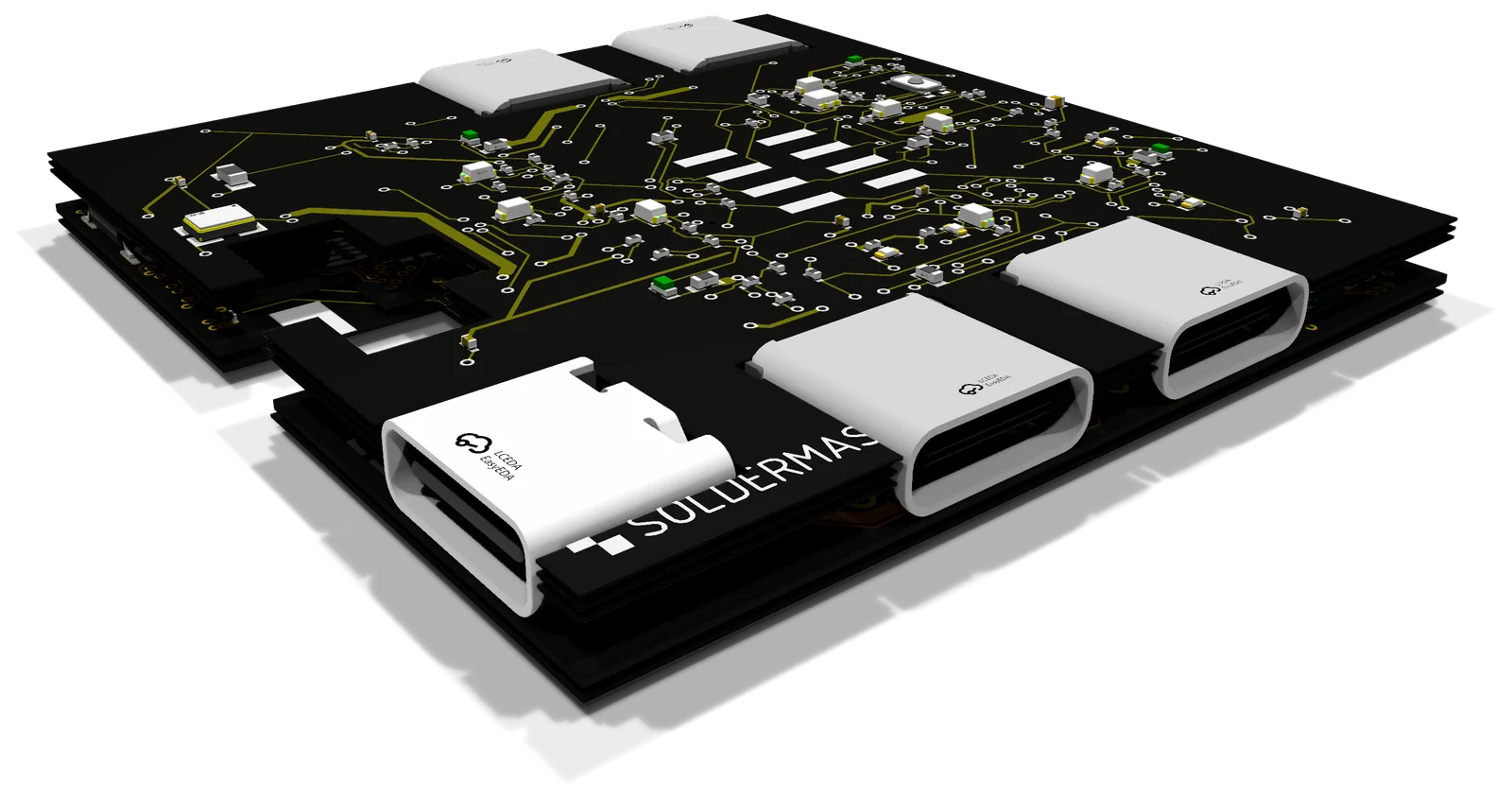
Every soldermask build routes with Lightcycle: from the command line, the workbench and the MCP server. Anything it could not connect is listed, net by net.
Measured against the open-source routers, with the same time limit for each, and judged by KiCad.
Every netat once.