Six tries, the best kept
Each build tries six placements and keeps the best. That best routes 80.4% of the time.
Placer
58 parts settling into a board, drawn as a point cloud. Hot, every part jumps around; as it cools, only the moves that help are kept. Drag to turn.
Quorra’s first placement routes clean.
The board’s own designer’s placement routes clean.
705 open-hardware boards, each placed by its designer and by Quorra, then routed by the same router, 5 Sep 2026. 0.3 points apart is a tie. With six tries, Quorra’s best routes on 80.4% of 694 boards, against 74.8% for their designers.
Parts and their connections arrive from the design, unplaced. Every line is a connection the copper must make.
Quorra shuffles the parts and lets them settle. A solid part is overlapping or off the board, and it keeps going until none is.
Lightcycle lays the copper where Quorra put the parts.
KiCad checks the board. Passed, nothing left unrouted.
A real build, replayed from its KiCad file: 22 parts on 68 × 37 mm, 15 Sep 2026. The end state is the build’s own; we animate the steps between.
Each build tries six placements and keeps the best. That best routes 80.4% of the time.
Compiled in Rust, and tested to give the Python reference’s answer bit for bit.
Pin a connector to an edge or a part to a spot, and Quorra works around it.
Mark an antenna’s clear zone and Quorra steers parts away from it. The router keeps copper out too.
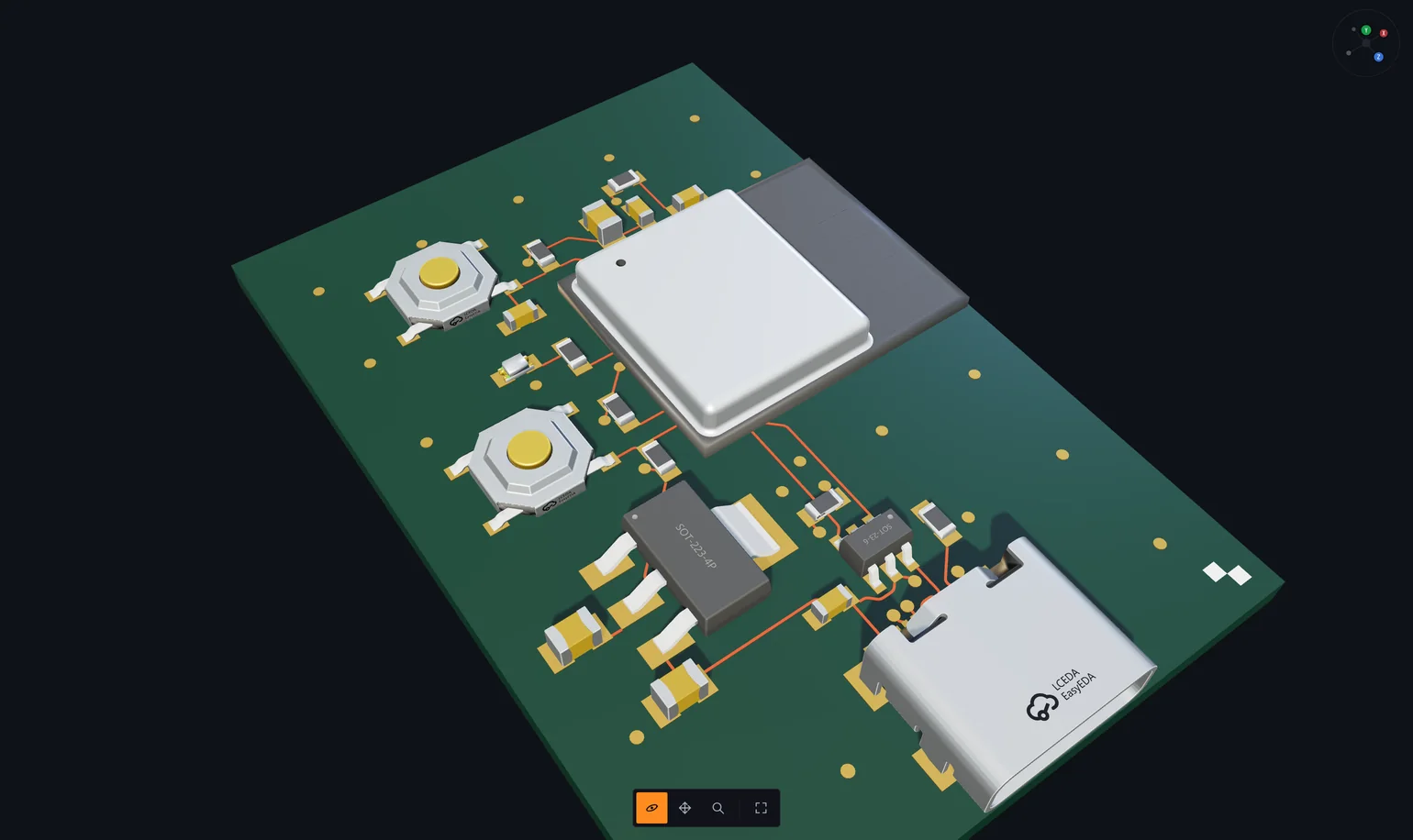
Every soldermask build places with Quorra, unless you bring your own placement. Over MCP, an agent can score a placement in seconds without routing it.
The research behind it: how it learned what the router can route, and how it compares with people.
Where theparts go.